Willgerodt-Kindler Reaction
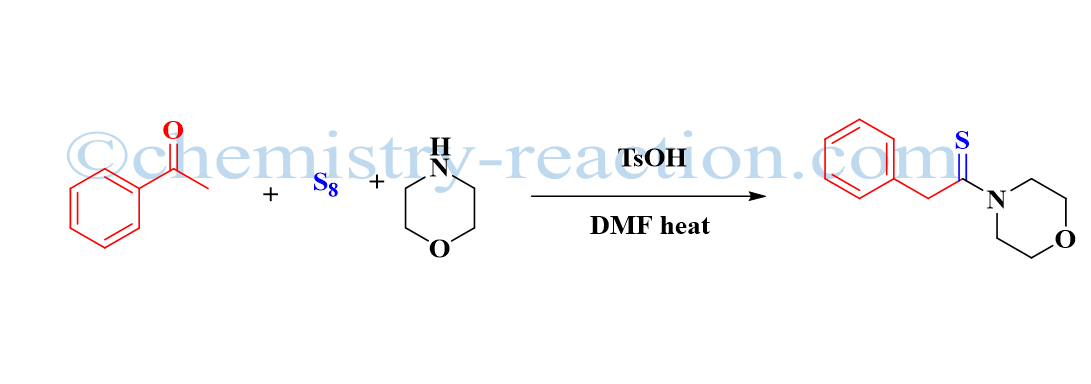
The willgerodt kindler reaction is the modification of the Willgerodt Reaction. It comes under a Rearrangement reaction. The name has been given after Karl Kindler.

Organic Chemistey for JEE|NEET|GATE|NET
rearrangement reaction organic chemistry | rearrangement reaction ppt | examples of rearrangement reaction | rearrangement reaction example | pinacol rearrangement reaction
The willgerodt kindler reaction is the modification of the Willgerodt Reaction. It comes under a Rearrangement reaction. The name has been given after Karl Kindler.
Definition : In Dakin oxidation, aromatic aldehydes or ketones undergo treatment with RCO3H or H2O2 to smoothly oxidize them into carboxylic acids. The reaction operates effectively when the aromatic aldehyde or ketone possesses electron-rich (-R, -OH, -OR, -NH2, or -NHR) substituents in the para or ortho positions. When the aromatic ring is substituted with electron-withdrawing … Read more
Aza-Cope Rearrangement Mechanism, Examples and Applications
Baker-Venkataraman Rearrangement is the base-promoted (KOH) rearrangement of aromatic 2-acyloxy ketones to the corresponding aromatic 1,3-diketone (β-diketones)
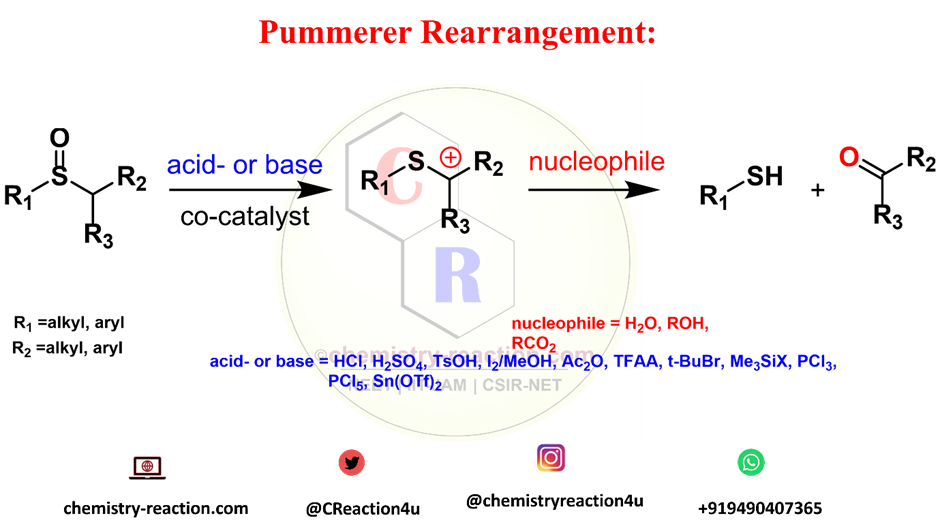
Formation of α-substituted sulfides from the corresponding sulfoxides (must have at least one hydrogen atom at their α-position) is referred to as the Pummerer rearrangement.